Bidspirit auction | Moses Haughton the younger (1773-1849)
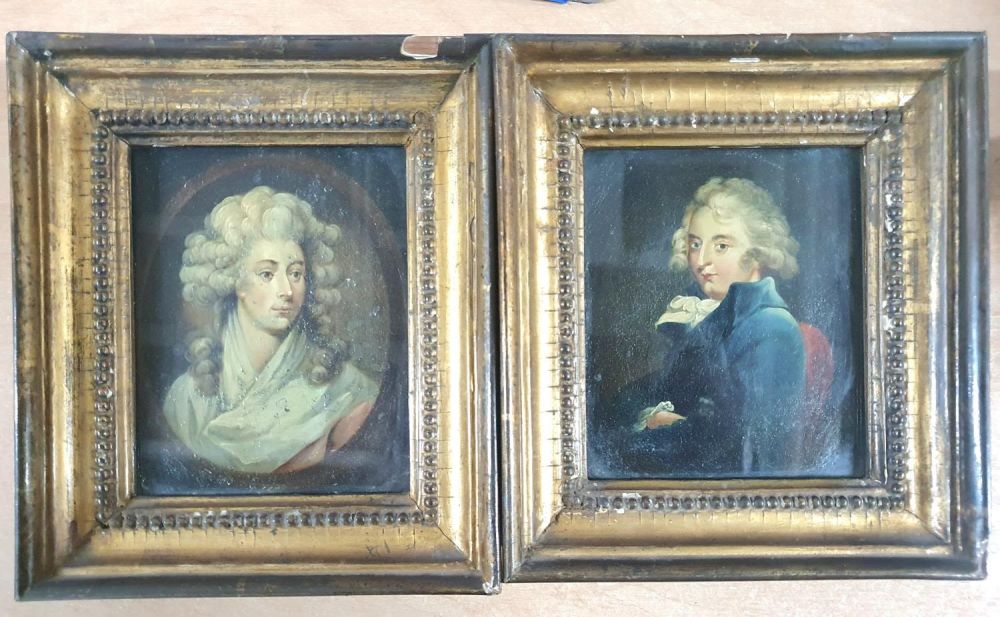
Moses Haughton the younger (1773-1849) circa 1800-1804 pair of oil miniature portraits of the Prince of Wales (later King George IV) and his (hidden) ”first” wife Maria Fitzherbert in original frames with old, hand written labels to the back of both miniatures (2) Moses Haughton the younger - studied at the RA schools in 1795 with Turner and was a notable engraver who was then employed by Henri Fuseli. He is also recorded as being a well known miniaturist and painted many of London's high society of this period. Maria Fitzherbert and the Prince of Wales - The met in London in 1784 and married on 15th December 1795. The marriage was not valid under English law because it had not received the prior approval of King George III and the Privy Council as required by the Royal Marriages Act 1772. Had approval been sought, it might not have been granted for many reasons including, for example, Fitzherbert's Catholic religion. Had consent been given and the marriage been legal, the Prince of Wales would have been automatically removed from the succession to the British throne under the provisions of the Bill of Rights and the Act of Settlement 1701 and replaced as heir-apparent by his brother, the Duke of York. The Prince married Caroline on 8 April 1795 however, in 1796, three days after Caroline gave birth to their daughter, Princess Charlotte of Wales, on 10 January, the Prince of Wales wrote his last will and testament, bequeathing all his ”worldly property to my Maria Fitzherbert, my wife, the wife of my heart and soul”. Maria Fitzherbert & George IV had a very turbulent on-off relationship together for the rest of their lives however it was well known that the Prince of Wales lived with Mrs Herbert at her London home, much of the time, between 1785 to 1804 when she moved to Brighton. We believe it is far more likely that the couple employed Haughton to produce these miniatures for their own personal property rather than Haughton simply producing them of his own accord in order to sell privately because - 1 - Haughton was a well renowned miniature portrait painter of the period, working in London and is known to have been employed by numerous high society figures. 2 - The Prince of Wales as a flamboyant spender, collector and supporter of the arts. 3 - The relationship was frowned upon and illicit and would therefore not be celebrated by the wider public/society.