Bidspirit auction | GREEK GNATHIAN OLPE WITH HERCULES
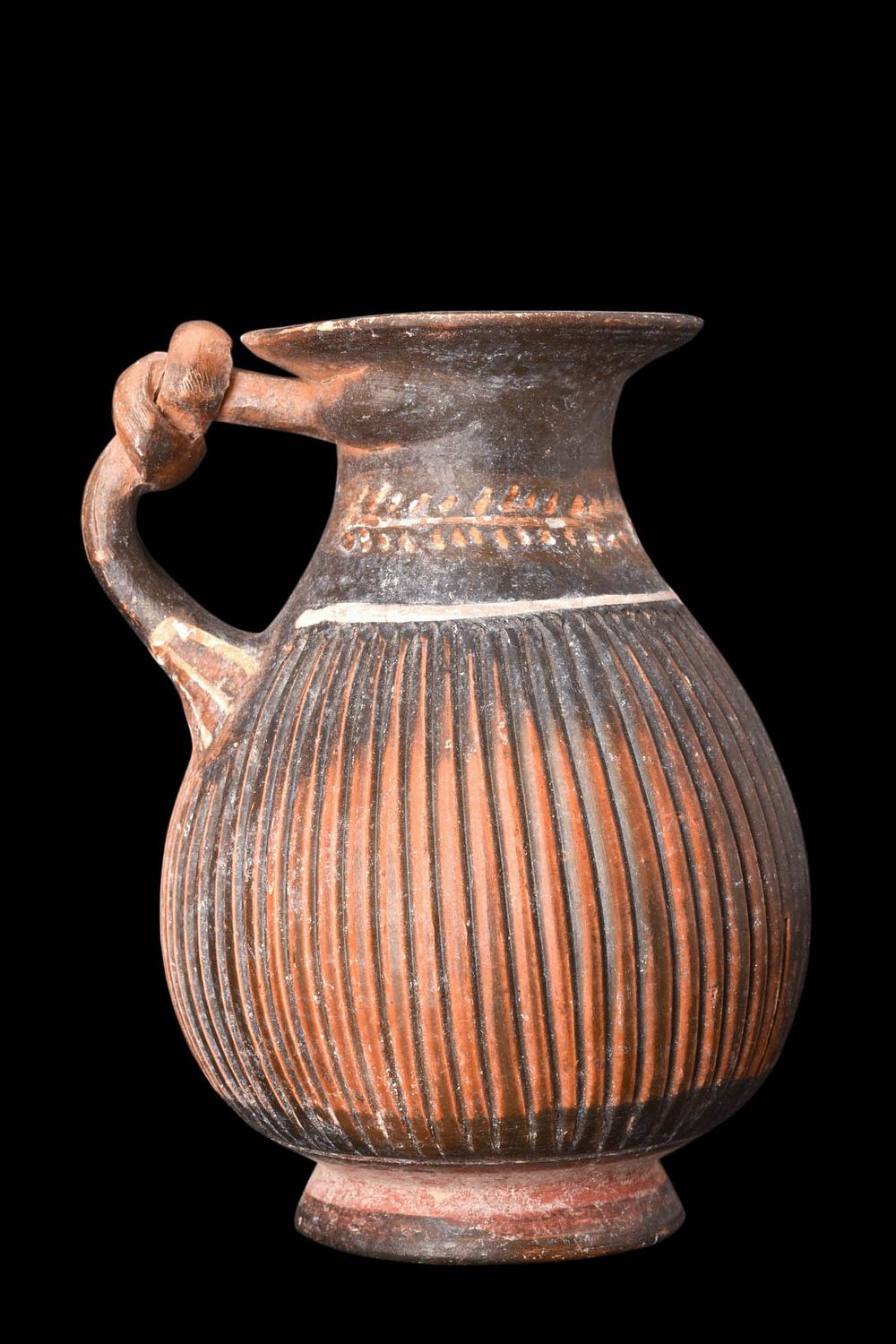
GREEK GNATHIAN OLPE WITH HERCULES KNOT HANDLE - Ca. 370 - 325 BC.This olpe features a bulbous body that is characterised by vertical ribbing, which adds texture and visual interest to the vessel. The shoulder is marked with a white band, which contrasts beautifully with the black glaze that covers the rest of the jug. The neck is decorated with a band framed from above and below by a dotted pattern. The handle connects the shoulder with the neck and features a Herculean knot, which is a decorative knot that symbolizes strength and resilience. The knot consists of two interlocking loops that are tied in a way that creates a continuous loop. The Herculean knot was often used in ancient Greek art to represent the strength and power of heroes like Hercules, and it adds a touch of mythological symbolism to this already beautiful vessel. The olpe sits on a low foot, which gives it stability and allows it to be set down on a flat surface without tipping over. The rim is everted and flat. Gnathian ware is a type of ancient Greek pottery that was made in the region of Apulia, in southern Italy. It is known for its distinctive black glaze, which is achieved by firing the pottery in a low-oxygen environment. The black glaze was often used as a background for decorative motifs, which were created using a variety of techniques, including incision, applique, and white slip painting. Gnathian ware was popular in ancient Greece and was exported throughout the Mediterranean world.Size: L:110mm / W:90mm ; 160gProvenance: Property of a central London Gallery; formerly in a South English estate collection; acquired in the 1990s from Andre de Munter, Brussels, Belgium; previously in and old European collection.