Bidspirit auction | [HISTORICAL LETTERS & DOCUMENTS] -
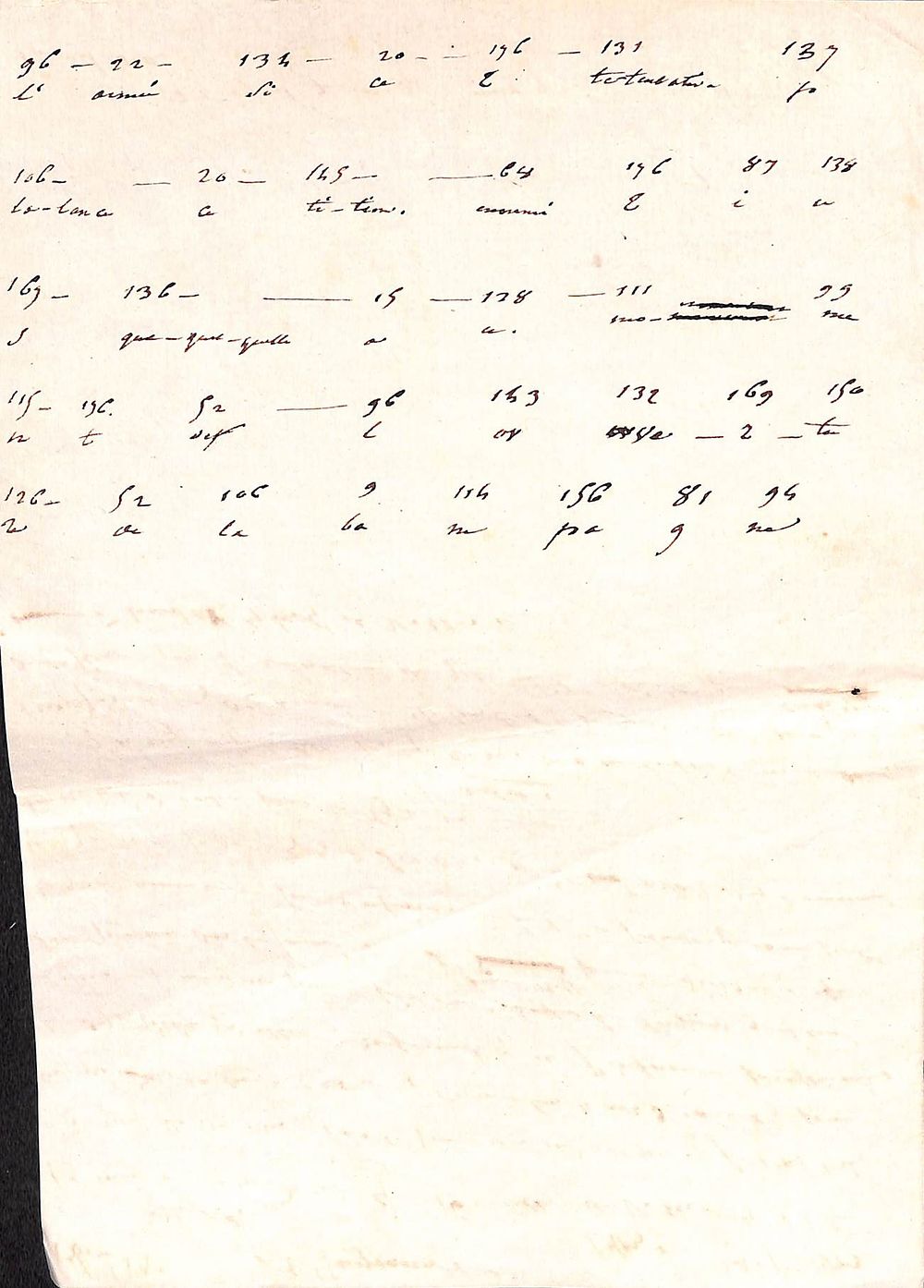
[HISTORICAL LETTERS & DOCUMENTS] - EUGENE DE BEAUHARNAIS (1781–1824) - TO NAPOLEON - Important Autograph Draft Letter - EUGÈNE DE BEAUHARNAIS (1781–1824) - Important Autograph Draft Letter to Napoleon, written during the retreat from Russia shortly after Eugène assumed command of the remnants of the Grande Armée. Posen [Poznań], 29 January 1813. Autograph draft in the hand of Eugène de Beauharnais, Viceroy of Italy, in French, addressed at the head “à l’Empereur” and dated Posen, 29 January 1813. The sheet bears extensive working material on both sides. Some losses to the paper, with foxing and contemporary signs of handling and use. An important working document from the final stages of the retreat from Russia, written by Eugène de Beauharnais to Napoleon only days after he had assumed supreme command of the shattered remnants of the Grande Armée following Murat’s departure. The letter belongs to one of the most critical moments of Eugène’s military career. After the catastrophic Russian campaign and Napoleon’s departure for Paris in December 1812, command of the surviving army had initially passed to Joachim Murat. In January 1813 Murat abandoned the army and returned to his Kingdom of Naples, leaving Eugène to take command of the rapidly diminishing French forces and organise their retreat and reconstruction in Poland and Germany. Writing from Posen (Poznań) on 29 January 1813, Eugène reports directly to Napoleon and refers repeatedly to the instructions arriving from the Emperor. He acknowledges the receipt of multiple letters: “j’ai reçu le 16 lettres de V.M.” (“I received on the 16 letters from Your Majesty”), and later: “j’ai reçu auj. la lettre par laq. V.M. me donne copie…” (“I received today the letter by which Your Majesty sends me a copy…”). These references convey the urgency of the correspondence passing between Napoleon and his new commander in the field as they attempted to preserve and reorganise what remained of the Grande Armée. Posen had become a crucial point in the French withdrawal, and Eugène was confronted with the formidable task of maintaining cohesion while responding to the advancing Russian forces and preparing a further retreat westwards. Of particular interest is the physical character of the manuscript. The recto is occupied by five densely written lines consisting principally of sequences of numbers interspersed with isolated words or textual fragments. The arrangement appears to represent work connected with the deciphering or enciphering of a coded communication, offering a striking material indication of the procedures by which sensitive military information could be transmitted during the campaign. On the verso, Eugène reused the same sheet for his draft to Napoleon. Corrections, abbreviations and the absence of the formal finish of a dispatched letter clearly reveal its character as an office draft rather than the copy actually sent to the Emperor. Further lines written in the reverse direction at the foot of the sheet reinforce its nature as a working document produced amid the pressures of active military command. The date lends the manuscript particular historical significance. Eugène had only just inherited responsibility for the remnants of an army devastated by the Russian campaign. His conduct during the ensuing withdrawal would demonstrate his ability to preserve a degree of order under extraordinarily difficult circumstances, as French forces progressively abandoned their positions in Poland and fell back towards the Oder and eventually the Elbe. A compelling working document from the aftermath of Napoleon’s Russian catastrophe. Combining Eugène de Beauharnais’s autograph draft of a dispatch to the Emperor with what appears to be contemporary work on a coded military communication, the sheet preserves the immediacy of command at one of the most precarious moments in the history of the Grande Armée. Written at Posen shortly after Eugène assumed command, it records both his direct exchange of orders with Napoleon and the practical mechanisms of military communication during the desperate attempt to reorganise the remnants of the French army in January 1813.