Bidspirit auction | [ALCHEMY, MAGIC & ESOTERICA] -
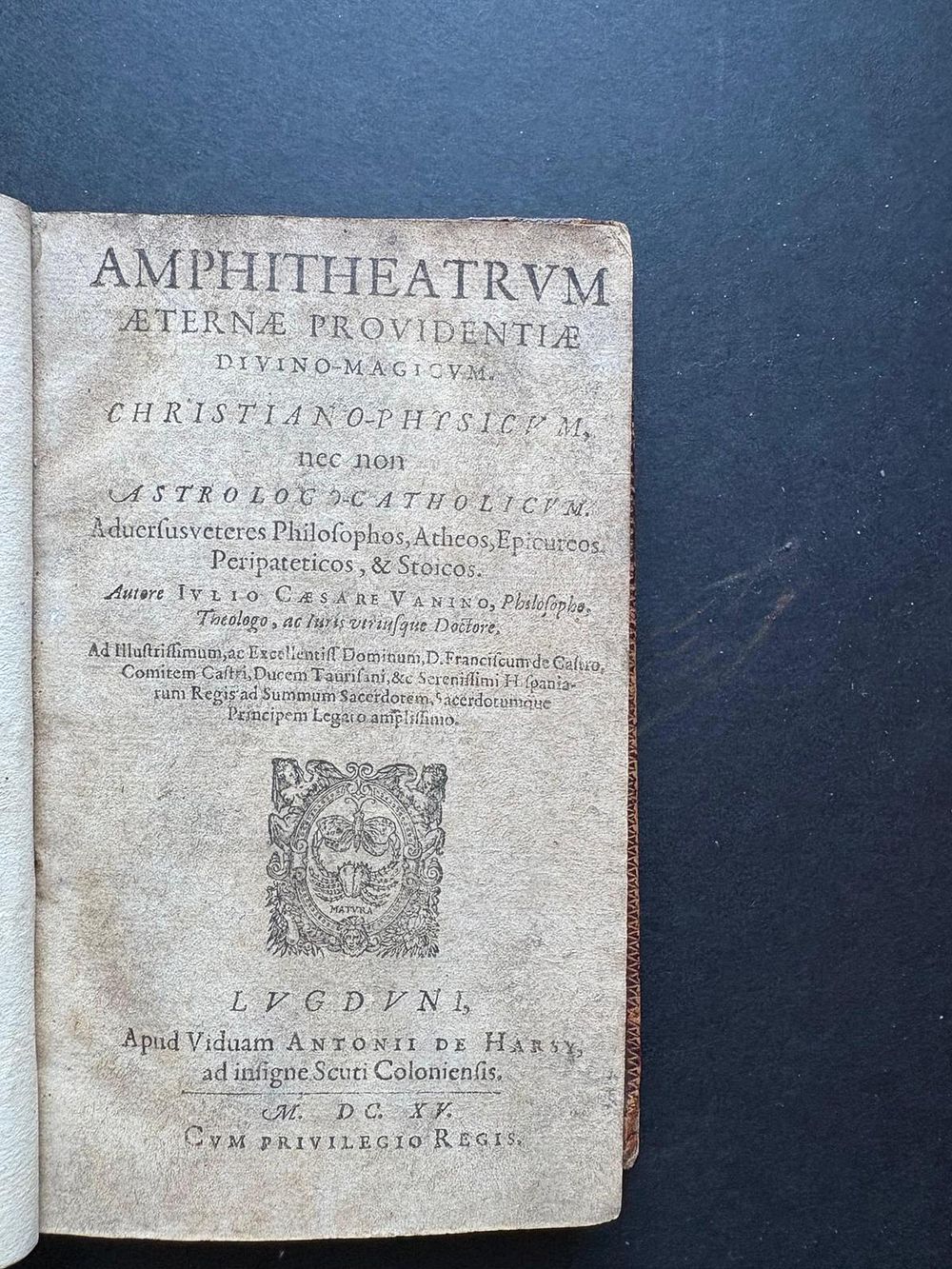
[ALCHEMY, MAGIC & ESOTERICA] - VANINI, Giulio Cesare (1585–1619) - Amphitheatrum aeternae providentiae - VANINI, Giulio Cesare (1585–1619). Amphitheatrum aeternae providentiae divino-magicum, christiano-physicum, nec non astrologo-catholicum. Adversus veteres philosophos, atheos, epicureos, peripateticos et stoicos. Lyon: Widow of Antoine de Harsy, 1615. 8vo. [24], 336, [8] pp. Printer’s device on title. Eighteenth-century red morocco gilt. Title somewhat dust-soiled; binding worn. First edition. The first published work of Giulio Cesare Vanini, one of the most controversial and tragic figures of early seventeenth-century European philosophy, and an important document in the emergence of libertine and naturalistic thought immediately before the great intellectual upheavals of the seventeenth century. Published at Lyon in 1615, the Amphitheatrum presents itself as an ambitious defence of divine providence against atheists, Epicureans, Peripatetics and Stoics. Across a series of philosophical disputations Vanini examines the existence and nature of God, providence, free will, celestial influences, astrology, miracles and the arguments of ancient and modern philosophers. The work is particularly fascinating because of the tension between its declared apologetic purpose and the philosophical method employed by its author. Rather than relying principally upon Scriptural authority, Vanini engages directly with philosophy and natural inquiry, discussing and confronting a wide range of authorities including Aristotle, Averroes, Cicero, Thomas Aquinas, Cardano and the classical schools. Modern scholarship has consequently regarded the Amphitheatrum as a crucial transitional work in Vanini’s intellectual development. Although outwardly directed against atheism, it already reveals the strong naturalistic tendencies that would become considerably more explicit in his second and final book, De admirandis naturae reginae deaeque mortalium arcanis, published at Paris in 1616. Treccani characterizes the Amphitheatrum’s structure as “pseudo-apologetic”, emphasizing the complex strategies of philosophical dissimulation surrounding Vanini’s thought. Only a year later, the De admirandis was condemned by the theological faculty of the Sorbonne. Vanini subsequently moved to Toulouse, where he was arrested in 1618. On 9 February 1619 he was condemned as a blasphemer and atheist and executed at the Place du Salin, after one of the most notorious philosophical trials of the early modern period. His violent death transformed Vanini into an emblematic figure in the history of European free thought. Later generations variously portrayed him as an atheist, pantheist, libertine, materialist and martyr of intellectual freedom, and his works became part of the philosophical debate concerning the limits of natural explanation and religious authority. The Amphitheatrum is therefore considerably more than a treatise on divine providence. It records a decisive moment in the passage from Renaissance natural philosophy towards the more radical philosophical culture of seventeenth-century Europe, standing at the intersection of theology, astrology, natural philosophy and the early libertine tradition. A rare and important first edition of Vanini’s first book, published only four years before his execution at Toulouse, and an exceptional witness to one of the most dramatic episodes in the history of early modern philosophy.