Bidspirit auction | [FINE BINDINGS] - CICERO, Marcus
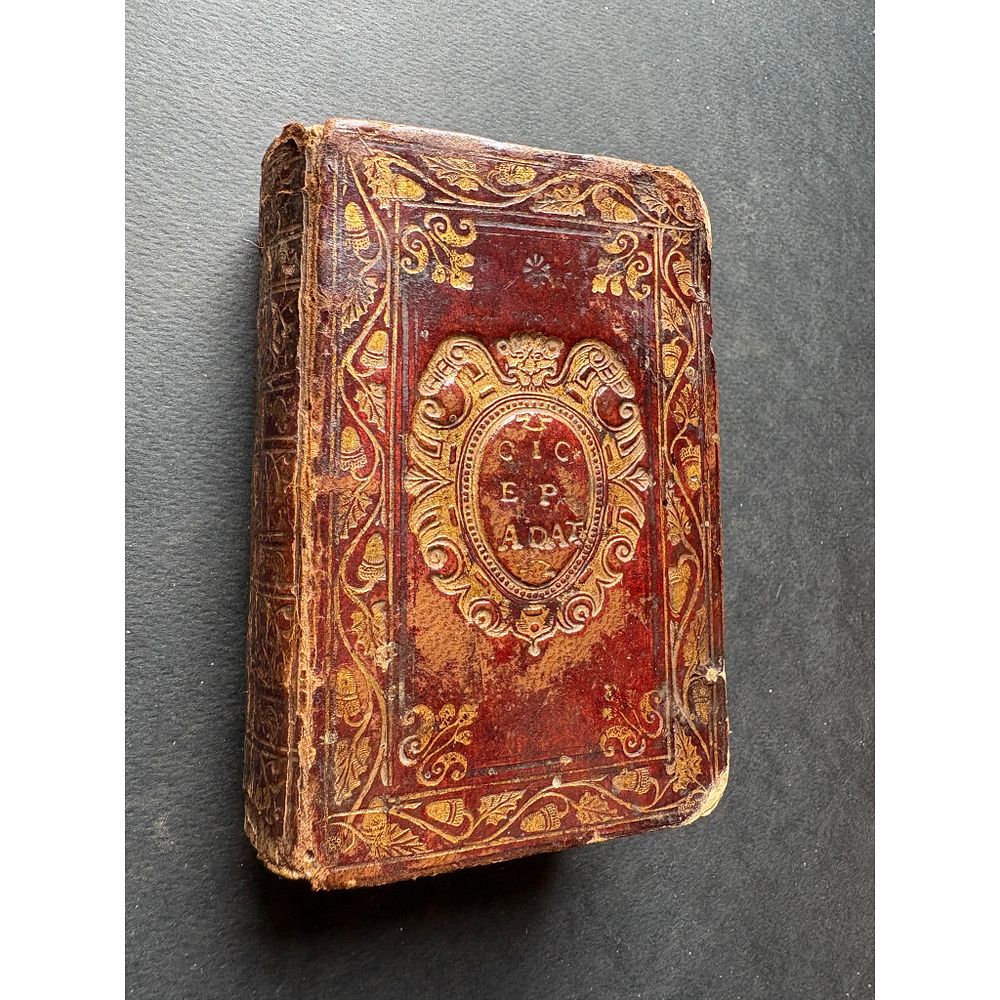
[FINE BINDINGS] - CICERO, Marcus Tullius (106–43 BC) - Epistolae ad Atticum, ad Brutum, & ad Q. fratrem - ***Note: This lot is located in Italy and requires an Italian export licence. We will manage the full application process for you. An additional fee of £50 applies.*** CICERO, Marcus Tullius (106–43 BC). M. T. Ciceronis Epistolae ad Atticum, ad Brutum, & ad Q. fratrem, ita postrema hac editione castigata, ut nulla fere quibus scatebant, menda supersint. Ioannis Michaelis Bruti in easdem scholia, quibus loci obscuriores illustrantur. Lyon: Antoine Gryphius, 1567. 16mo (120 × 75 mm). 803, [125] pp. Printer’s device of Antoine Gryphius on title. Roman and italic type, with Greek passages. Contemporary red morocco, richly decorated in gilt and blind, the covers framed and ornamented with tooling; spine similarly decorated. Edges exceptionally and elaborately decorated in gilt, blind and colour. Binding with considerable wear to extremities, corners and spine. Worming throughout, occasionally repaired, with some traces also affecting the title; occasional browning and staining. Early ownership inscriptions on title, some subsequently erased. A particularly appealing copy of this compact Lyon edition of Cicero’s private correspondence, distinguished by its fine late sixteenth-century red morocco binding and unusually elaborate decorated edges. The volume contains Cicero’s letters to Titus Pomponius Atticus, Marcus Junius Brutus and his brother Quintus, accompanied by the scholarly annotations of the Hungarian-born humanist Giovanni Michele Bruto. The Epistolae ad Atticum occupy a unique position in classical literature. Written without expectation of publication to Cicero’s closest friend and confidant, they reveal the statesman with an immediacy largely absent from his public speeches and philosophical writings. Politics, personal anxieties, financial concerns, literary projects and the increasingly violent collapse of the Roman Republic appear almost day by day through Cicero’s own words. The letters to Brutus and Quintus further illuminate the dramatic final decades of Republican Rome and provide an extraordinary first-person record of the political world of Caesar, Pompey, Antony and the assassins of Caesar. The present edition is enhanced by the scholia of Giovanni Michele Bruto, or Johannes Michael Brutus, the distinguished sixteenth-century historian and humanist. His annotations clarify difficult passages and reflect the intense philological study devoted to Cicero by Renaissance scholars. Printed by Antoine Gryphius, member of the celebrated Lyon dynasty of printers founded by Sébastien Gryphius, the volume belongs to the flourishing sixteenth-century tradition of small-format classical editions intended for learned but portable use. The Gryphius device appears on the title-page. The principal distinction of the present copy, however, is its contemporary binding. The finely tooled red morocco and particularly the richly decorated gilt and coloured edges transform this small humanist edition into an object of considerable bibliophilic character. Such elaborate edge decoration, intended to complement the external tooling of the binding, is an especially attractive survival of late sixteenth-century book craftsmanship. Despite the worming and wear to the binding, this remains a highly evocative Renaissance copy, preserving both an important humanist edition of Cicero and a particularly handsome example of contemporary decorative bookbinding. A charming and desirable sixteenth-century Cicero, notable for its contemporary red morocco binding and exceptionally decorative gilt and coloured edges.